
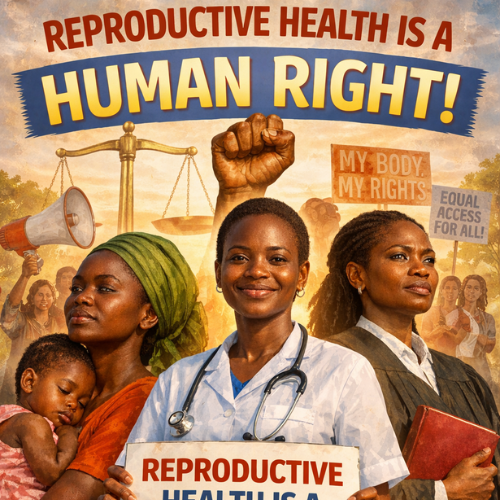
Across much of Africa, sexual and reproductive health and rights (SRHR) are still discussed primarily as a matter of service delivery: clinics, commodities, donor-funded programmes, and outreach initiatives. These services are important, and in many communities, they are lifesaving. But framing SRHR as a service rather than a right quietly weakens accountability. When access depends on funding priorities, political goodwill, or moral approval, it becomes optional and uneven. When SRHR is recognized as a human right, states are obligated to act regardless of shifting global politics.
This distinction is particularly urgent at a moment when proposed policy changes in major donor countries, especially the United States, threaten to reshape global health financing. Renewed debates around restricting foreign assistance, expanding abortion-related conditionalities, or reducing overall global health funding expose the fragility of Africa’s reliance on externally driven service models.
International and regional human rights law recognizes sexual and reproductive health as integral to the rights to health, dignity, equality, and life. African constitutions, court decisions, and policy frameworks increasingly reflect this understanding. Yet in practice, many women and girls still experience SRHR as something to be negotiated rather than guaranteed. This gap between law and lived experiences is not accidental. It is an indication of systemic failures that prioritize programmes over rights and donors over duty bearers.
A rights-based approach to SRHR fundamentally changes the conversation. First, it clarifies state obligations. Governments are not merely encouraged to provide services when resources allow; they are legally required to respect, protect, and fulfil SRHR without discrimination. This includes removing legal barriers, regulating private actors, allocating sufficient domestic resources, and ensuring remedies when rights are violated. Second, it rebalances power. Individuals become rights-holders, not passive recipients of development aid.
Proposed U.S. policy shifts highlight why this framing matters. Past iterations of funding restrictions, such as the Global Gag Rule, had far-reaching consequences across African health systems. Clinics closed. Contraceptive supply chains were disrupted. HIV services, maternal health programmes, and gender-based violence responses were weakened even where abortion services were not directly provided. The damage extended well beyond reproductive health, undermining integrated systems that communities rely on daily.
These impacts are rarely captured in policy debates occurring thousands of miles away. Yet for women in informal settlements, rural areas, and humanitarian settings, they are deeply personal. Adolescents are turned away from clinics because providers fear legal or funding repercussions. Survivors of sexual violence encounter fragmented services. Women living in poverty are told to wait, return later, or seek care elsewhere. When SRHR is treated as charity, access becomes conditional on ideology rather than need.
A rights-based framework exposes these realities for what they are: violations, not inconveniences. It also strengthens resilience in the face of global uncertainty. Courts, national human rights institutions, parliamentary oversight bodies, and regional mechanisms such as the African Commission and African Court can only be meaningfully engaged when SRHR violations are recognized as rights violations. Litigation and advocacy then become tools not merely for preserving services, but for securing structural protection against political shifts beyond Africa’s borders.
This is not an argument against international solidarity or global health financing. External support remains critical. But it is an argument against dependency models that leave essential health services vulnerable to foreign political cycles. When donor policies change, women’s bodies should not bear the cost. Domestic accountability must be the anchor.
Lawyers, advocates, and policymakers therefore have a crucial role to play as stakeholders. Beyond expanding services, they must interrogate laws that criminalize, stigmatize, or restrict access to care. They must challenge budgetary decisions that leave women’s health chronically underfunded. And they must centre African women, girls, and gender-diverse people in defining what justice, autonomy, and dignity mean rather than allowing those definitions to be shaped by debates in foreign legislatures.
Ultimately, treating SRHR as a human right is about more than healthcare. It is about dignity, sovereignty, and equality. It recognizes that reproductive lives are not peripheral to development but central to the rule of law and social justice. In an era of uncertain global commitments, Africa does not need fewer services. It needs stronger accountability, greater domestic investment, and rights-based protections that do not disappear when political winds shift.
Rights endure. Charity fluctuates. The future of women’s health in Africa depends on recognizing the difference.